
2020/09/22
Breadcrumbs navigation

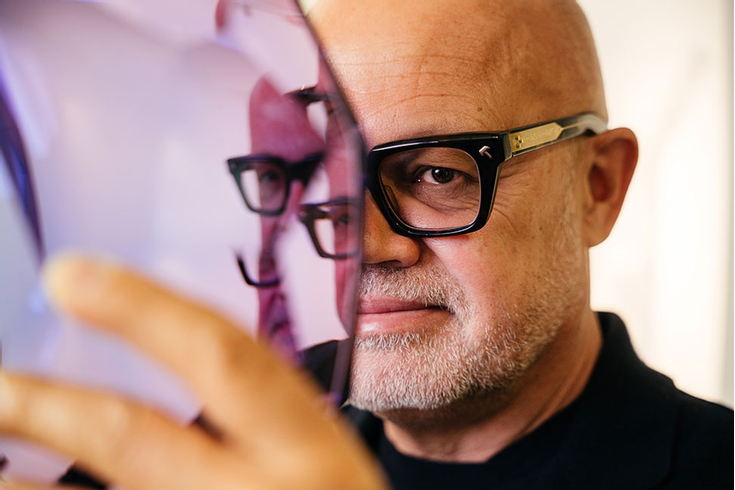
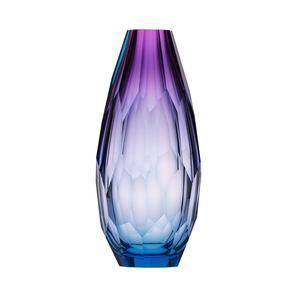
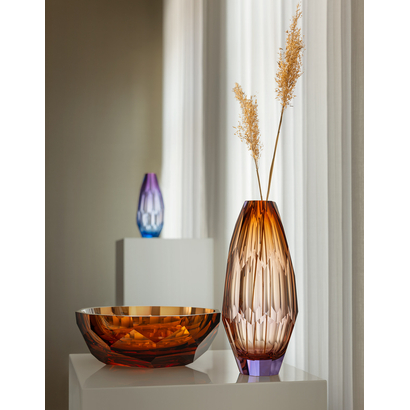
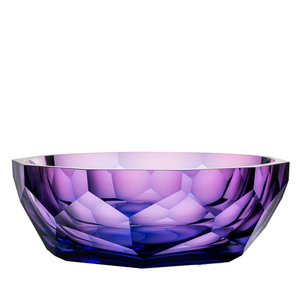
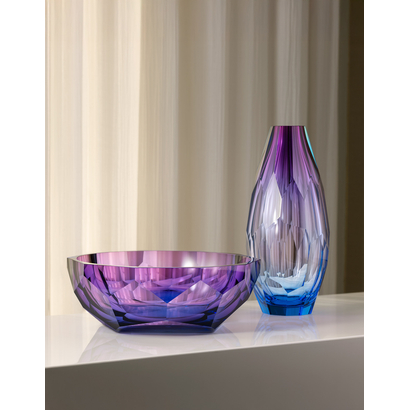
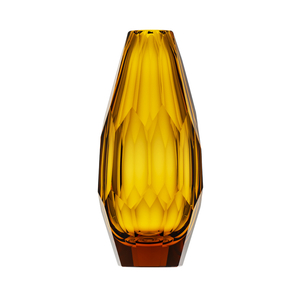
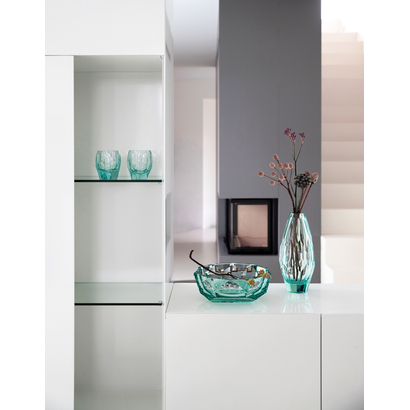
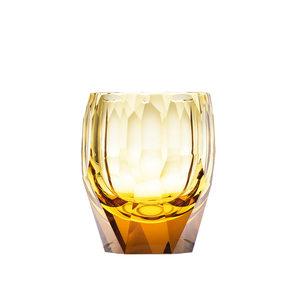
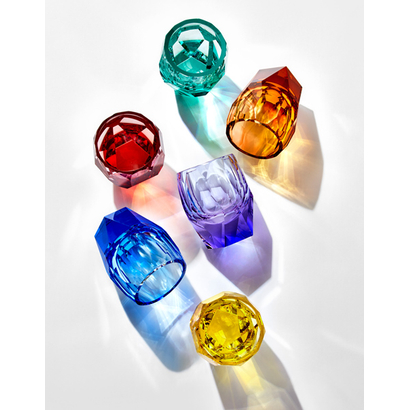
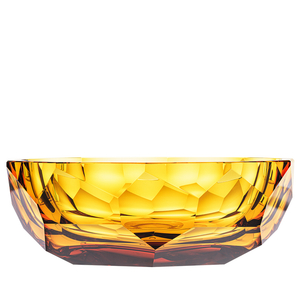
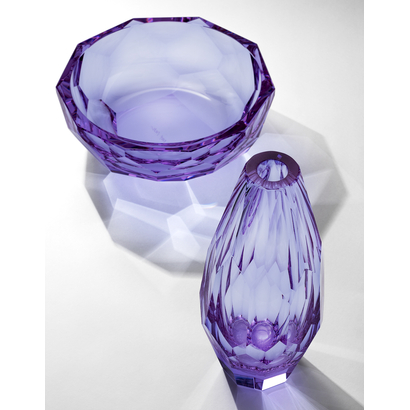
“Cubism left a deep impression in the Czech Republic. It intertwined with architecture, painting, furniture, porcelain, and glass,” says designer Rony Plesl, whose vases and bowls, designed for Moser, pay homage to this style. He greatly values collaborating with our glassmakers: “Moser is elegance, style, and craftsmanship.”
You were born in Jablonec nad Nisou, in the Sudetenland, 20 years after the war. What was your childhood like, and what sort of relationship do you have with this glassmaking region?
My childhood was beautiful. We played hockey, football, went skiing, and I even did athletics – we spent a lot of time outside, and I pretty much lived to play sports until I was fifteen. Then I went to the Secondary School of Applied Arts in Železný Brod and became obsessed with art. I lived for 14 years in Jablonec and still feel strongly attached to it today. It’s true that this region rose and fell on the backs of German craftsmen. We have this grand heritage of the glassmaking and jewellery-making arts thanks to these Czech Germans – this we have to admit. In fact, all the glassmaking jargon we use today comes from German; everything we say at the furnace and in the glass-cutting workshop is a Czech misnomer of German words. Anyone who knows the Jablonec and Liberec regions as well as I do knows there are still beautiful, although now often dilapidated, villas and small factories left here. During the Austro-Hungarian days, this region was the largest exporter of glass, bespoke jewellery, and Christmas decorations. It was a region wealthier than Prague in many ways.
When did you visit a glassworks for the first time?
In Železný Brod. Since then, I spent the rest of my days in and out of glassworks, and I feel the best around glassmakers. It doesn’t take much for them to speak their minds, but that’s how I like it; I’d rather be around them than artists – they’re more sincere. And like I say to my students, experience around the furnace is important for design. It’s there that you learn the tricks of the trade and figure out what is and isn’t possible.
Who influenced you the most at the glassmaking school in Železný Brod?
Pavel Ježek. The local cantor and future headmaster. He influenced me greatly throughout my entire life. Both as a person and professionally. An incredible man and excellent creator, who isn’t well known today outside of this region.
After secondary school, you decided to continue your studies at the Academy of Arts, Architecture and Design in Prague (UMPRUM). Did they accept you first try?
I got in on my first attempt, which wasn’t all that common; only about eight people out of 30 made it from my graduating class. Today, they accept loads of students, but I had peers who needed as many as eight or even twelve tries. Since I studied glassmaking moulds in secondary school and worked a lot with metal, I got in as a metal worker. However, the entire six years I was there, I only wanted to make it to Stanislav Libenský’s glassmaking atelier. But I was very introverted and horribly shy to pay the professor a visit. It was much later in Železný Brod that we got to work around each other. We both taught there, and I’d like to say we were even friends. He gifted me a drawing of his, I’ve got it hung up here on the wall.
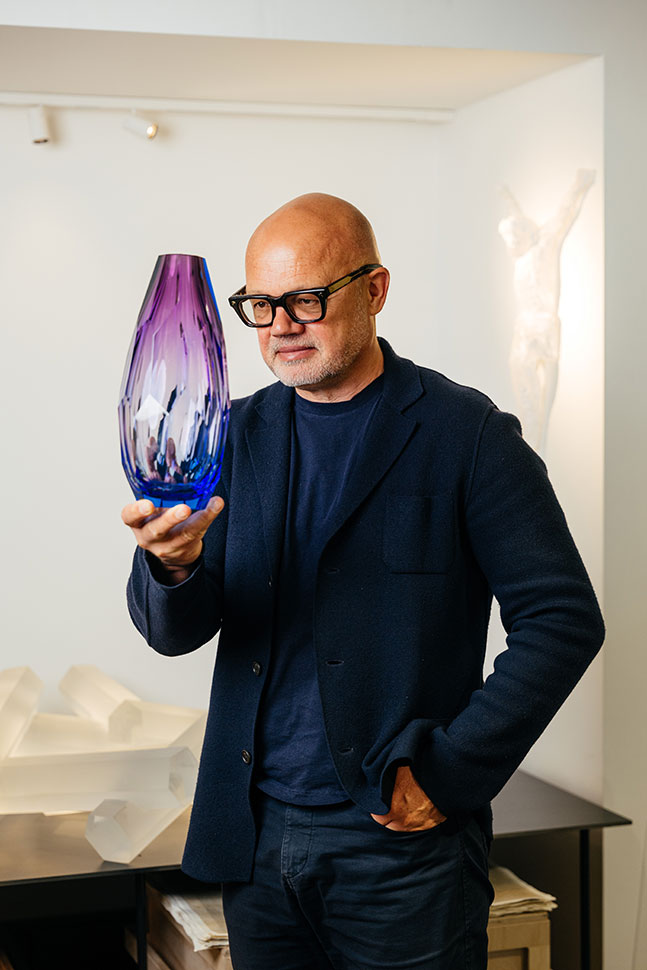
Stanislav Libenský is a glassmaking legend. Who else do you remember from your days at UMPRUM?
I was probably most creatively influenced by Vratislav Karel Novák, then, on a personal level, Jiří Harcuba. He was quite the noble, educated, and sensitive individual.
Two giant personalities; the first an incredible sculptor and jewellery maker, the other a genius glyptic and medallist. However, you also gained experience from abroad…
Since all my studies were completed under the communist regime, I wasn’t able to take up a traineeship anywhere. I attended a Christian congregation, but I wasn’t part of the Socialist Youth Union… but the moment the Velvet Revolution happened, I set off for a traineeship in Nice, then Taiwan. This helped me loads, but I gained the most during the four years spent travelling regularly to Murano in Venice, where I worked for one of the oldest family-run glassworks in the world: Barovier & Toso.
You later began to teach at the same schools where you studied. You’ve even been the head of the glassmaking atelier for a number of years. Do you guide the students based on what you yourself experienced there, or have you chosen another approach?
I taught for 10 years in Železný Brod and 17 at UMPRUM. It wasn’t easy in the beginning. To follow after such giants like Professor Libenský and Vladimír Kopecký… I grew more confident with time, and in the last seven or eight years, I think I’ve managed to bring a new vision to the atelier. My creed was to bring the atelier out of the closed-off glassmaking community, because glassmakers only mingle with themselves, putting on expos in glassmaking galleries, but I pioneered the opinion that all art is one. My students are successful; they assert themselves not only in design but also in free-form art. Tadeáš Podracký, Eliška Monsportová, Kateřina Handlová, Lukáš Novák, Tomáš Kučera, František Jungvirt, Marieta Tadenacová, Johan Pertl, Karolína Figar Vorlíková… these names are already the talk of the town.
You’re a person of faith with a keen eye for sacral architecture, design, and sculpture making, which is also reflected in your creations. Yet, you’re also connected to something entirely earthly – you’ve designed pints for an array of breweries, including Pilsner Urquell, Budweiser Budvar, and Bernard. What’s it like to move between these two worlds?
Beer glass – this was an era that greatly influenced my life. 22 years ago, I won the position of Lead Designer of the German Sahm Group, which came with a very good work contract… These pitchers are produced in several million pieces; over the years, probably 40 to 50 designs were made for around 25 brands. Drinkware glass is a world I still find immensely entertaining today; it’s a sort of counterpart to my sculpting. It’s like life. One moment you’re reading a challenging book on your own, and then you want to get out and have fun in a big group of people. Plus, these pitchers are something that’ll stay around for a while and impact a wide sphere of people. When I started, there was only one branded, original beer glass on the Czech market – for Pilsner Urquell. No other brewery had its own glassware. Then there was a period where the majority of beer glass on the market came from me. Budweiser Budvar, Bernard, Staropramen, Starobrno, and Krušovice later this year. I’m proud to have influenced beer culture in some way. It’s a nice feeling to sit in a restaurant and see people drinking from my pitchers.
You’re also the creator of the Czech Lion trophies, handed out each year by the Czech Film and Television Academy…
The Czech Lion… that was some beautiful work. It took a while to arrive at that statuette; it was changed twice, and my creation was its third rendition. Directors, screenwriters, and actors have told me that they love the trophy, something I’m always overjoyed to hear. And I don’t think they’ll change it again – maybe it’ll even be like the Crystal Globes at the Karlovy Vary International Film Festival.
You’re an exceedingly successful and renowned sculptor and designer – you were even named Professor. With your introverted nature in mind, was it difficult to assert yourself?
It was difficult to change myself. I’m no longer an introvert; I learned how to communicate. I had to learn, especially when I wanted to create art and carry through with my designs. I was still afraid to make phone calls even after university. I didn’t go to stores without people in them because I was scared the shop assistant would ask me what I wanted. It took a while before I found the confidence to communicate. But when you’re teaching – and I’ve been teaching for 17 years – you can learn just about anything in that time. But I still stare at the ground often. When someone takes the time to notice, they’ll see that I’m not as self-assured or extroverted as I may appear.
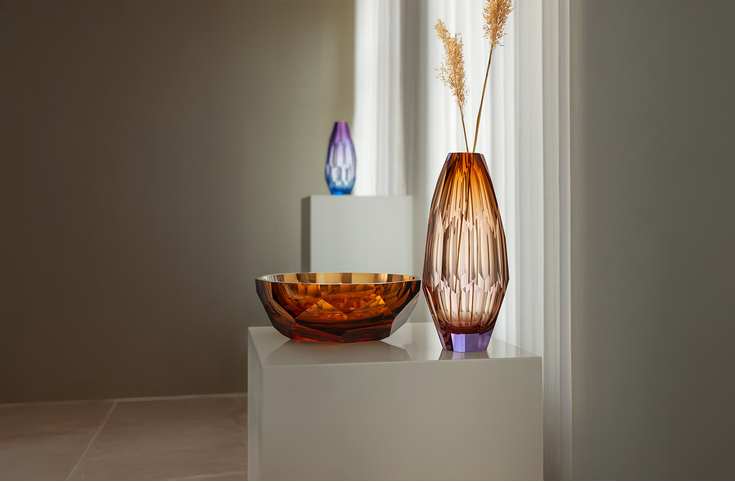 The Cubism Collection
What’s it like to be a father to five daughters? And is this amazing experience reflected in your work as well?
I always wanted daughters, and if I were to have more kids, I’d want only daughters again. I never really connected with boys; if anything, that macho world kind of scares me. Of course, I have friends who are men, but they’re men with a feminine soul. My daughters only mean more to me with time. The older I get, the happier I am to have them. My creations feature a heavy feminine feel, mixing the memento mori of Christianity with love and respect for women.
Rony Plesl (1965)
World-renowned sculptor and designer, Professor at the Academy of Arts, Architecture and Design in Prague, where he heads the glassmaking atelier. Since 2018, he’s worked with the groundbreaking and unique technology of smelting glass called Vitrum Vivum, which allows glass to be cast as if it were bronze. He first introduced to the world the monumental works of glass created in this way in 2019 at the Santa Chiara chapel in London’s Victoria and Albert Museum (the “Sacred Geometry” installation). His works are present in Czech and foreign museums and galleries as well as in private collections. His momentous glass composition “Trees Grow from the Sky” was part of the International Art Exhibition La Biennale di Venezia in 2022. Aside from imposing glass sculptures, he also designs chandeliers, candelabras, and glass drinkware sets. The beer we drink today by the majority of brands are still poured in glasses that he designed.