Breadcrumbs navigation
- Home page
- About Moser
- Blog
- Moser and Art Deco

Moser and Art Deco
Clean geometric lines, striking colours, precise craftsmanship, and fine materials. Art Deco, the style that dominated the world of design in the 1920s and ’30s, continues to fascinate with its elegance and optimism. It was during this period that the Moser glassworks made its own mark on the style’s history.
It experimented with new glass colours, explored unusual shapes, and pushed the boundaries of glassmaking. Today, Moser returns to the Art Deco aesthetic with Levitation, a new collection created in collaboration with French architect and designer Maxime d’Angeac.
The exhibition that gave Art Deco its name
The name Art Deco was later derived from the Exposition Internationale des Arts Décoratifs et Industriels Modernes, an international exhibition held in Paris in 1925. This extensive exhibition presented a new approach to decorative and applied arts.
Art Deco built on Art Nouveau, but often replaced its rich ornamentation and plant motifs with geometric stylisation. It brought geometric clarity, symmetry, strong lines, and stylised forms to the fore. It drew inspiration from technological progress, cars, aeroplanes, and ocean liners, as well as from exotic cultures and ancient Egypt. Stepped silhouettes, diagonals, sharp edges and contrasting surfaces were characteristic of the style. Popular materials included chrome, brass, enamelled steel, precious woods, lacquered surfaces, and, of course, glass.
Art Deco was more than an artistic movement. It became a way of life, reaching into every area of daily life, from architecture and interiors to cars, radios, clothing, graphic design, jewellery, perfume bottles, and small decorative objects. It embodied a belief in progress, speed, technology, and modern life. Its aesthetic conveyed optimism, joy, and a desire for beauty and elegance.
 During her 1928 tour, dancer Josephine Baker visited the Moser glassworks and even blew some glass herself.
Amongst the icons of the era was dancer and singer Josephine Baker, whose distinctive style, jewellery, and performances captured the spirit of the age. In 1928, she also visited the Moser glassworks, where she tried her hand at glassblowing.
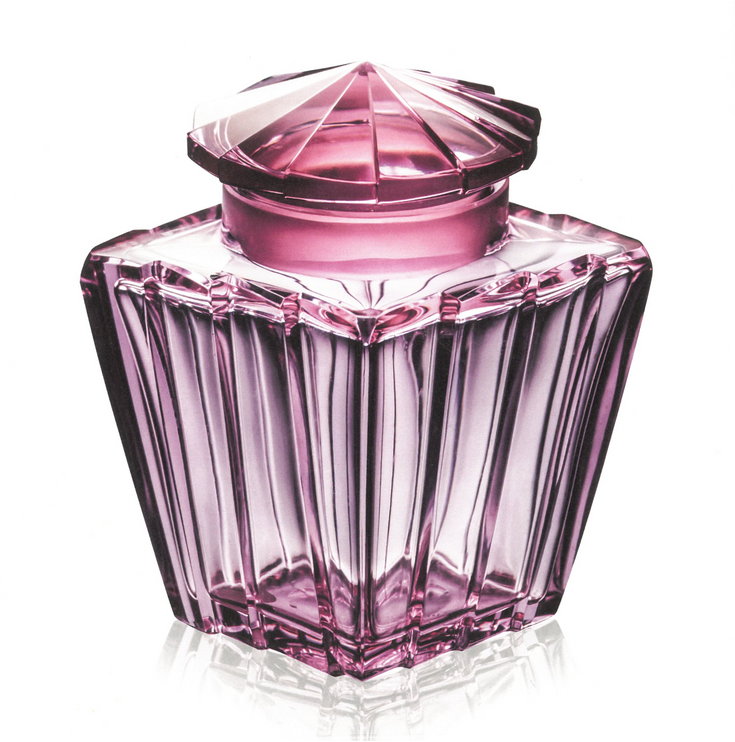 A jar for bathing salts, designed by Heinrich Hussmann.
Moser at the 1925 Paris Exhibition
For the Moser glassworks, the 1925 Paris Exhibition was a significant milestone. It received a gold medal for a collection of glass designs by Lotte P. Moser. The success confirmed its position amongst the world’s leading makers of luxury glass and opened up further opportunities to collaborate with artists and designers.
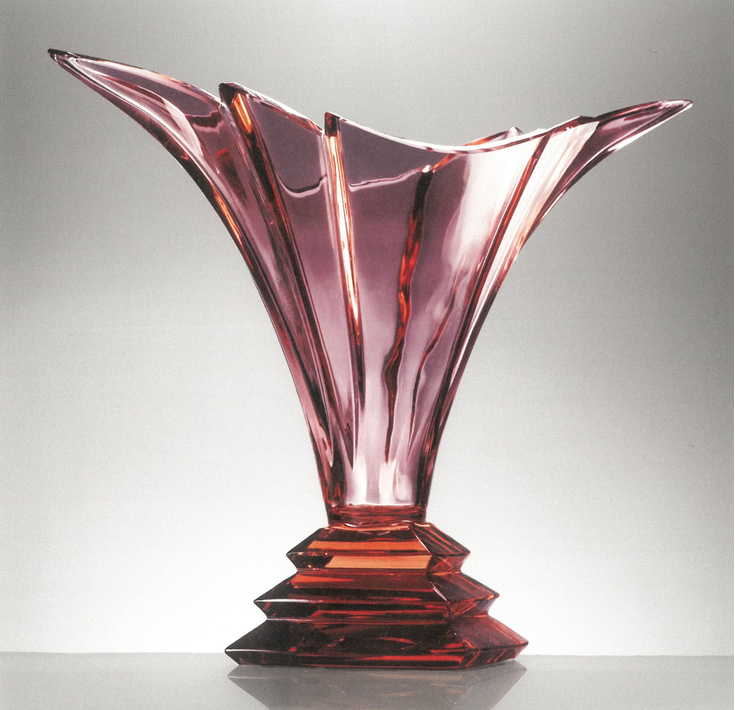 The Fan vase, designed by Lotte P. Moserová
Amongst the most notable exhibits was the Vějíř (Fan) vase, designed by Lotte P. Moser, granddaughter of the glassworks’ founder, Ludwig Moser. Her work stood out for its bold, technically demanding form and striking colours. Its dynamic shape and intricate cut were a particularly accomplished expression of Art Deco’s decorative principles.
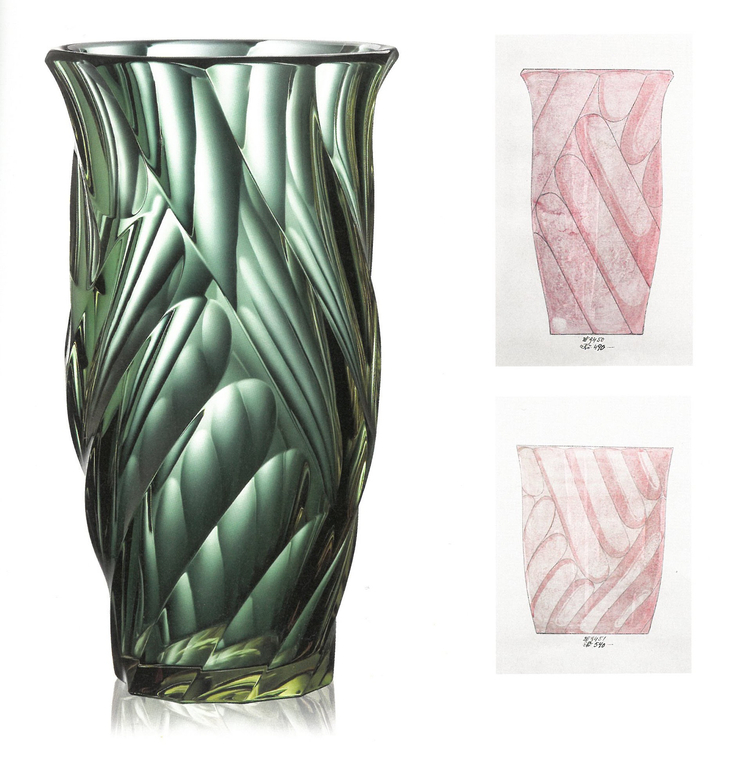 A vase designed by Heinrich Hussmann.
Another important piece of the Paris presentation was the Paříž (Paris) drinking set of 1925, designed by architect Rudolf Wels. Its clear glass, with cut and gilded details, combined geometric restraint with precise craftsmanship. A substantial goblet-shaped vase in brownish-yellow glass, designed by Leo Moser, also attracted attention. Its unusual tone and the way it used the volume of the glass pointed towards new colour experiments, which would become a characteristic feature of Moser’s work in the years that followed.
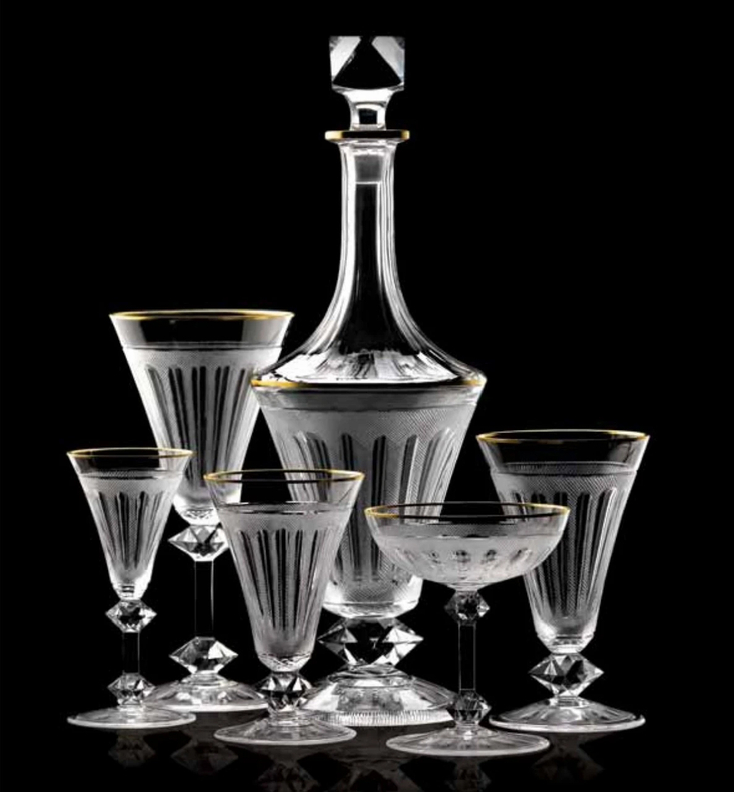 The Paris drinkware set, designed by Rudolf Wels.
Levitation: Art Deco in contemporary design
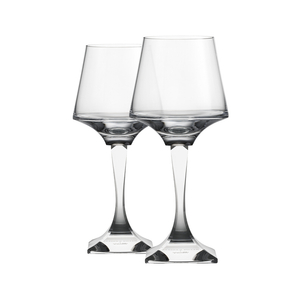
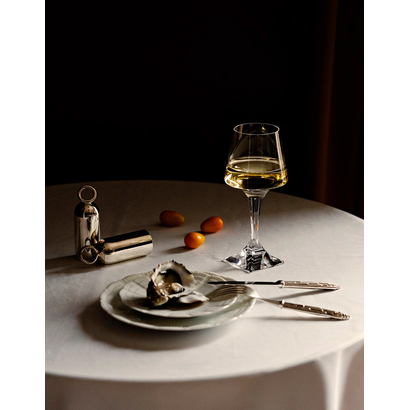
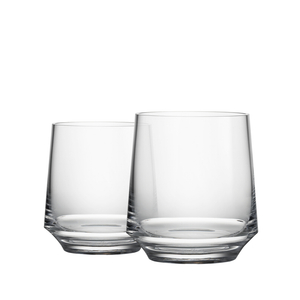
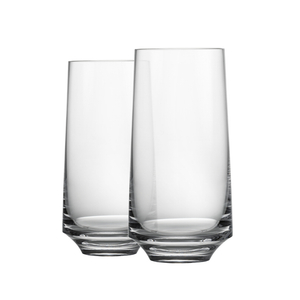
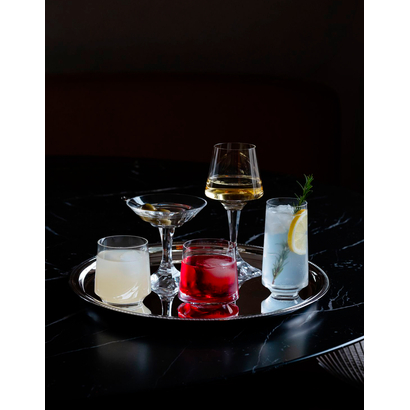
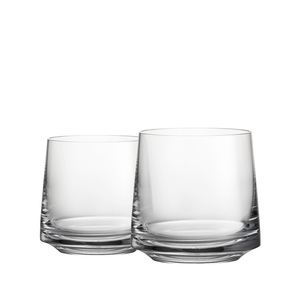
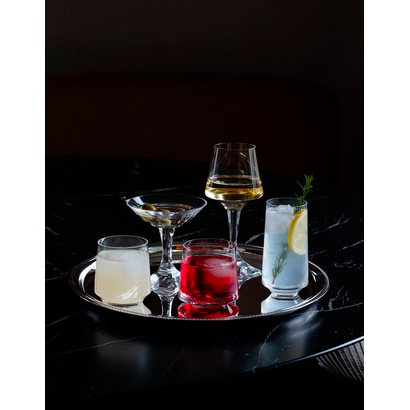
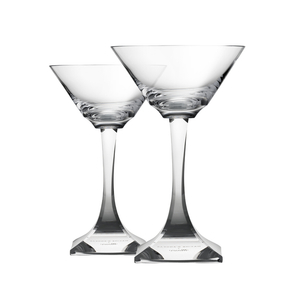
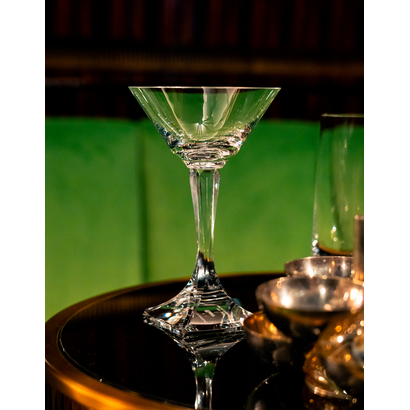
Moser returns to the Art Deco aesthetic today. The new Levitation collection, created in collaboration with French architect and designer Maxime d’Angeac, brings the principles of Art Deco into contemporary design. Levitation continues the tradition Moser developed in the 1920s: exploring new forms, respecting the material, and making light an integral part of the design.
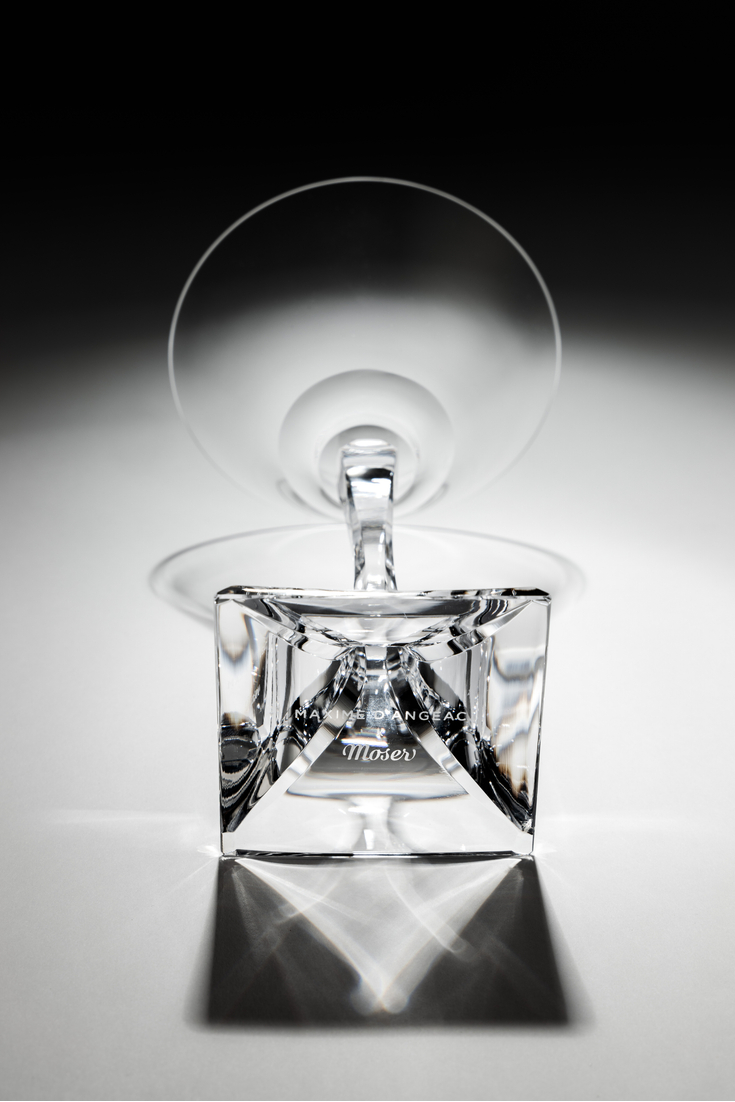 Levitation, the newest drinkware collection, draws inspiration from the Art Deco style.